What Visitors Should Know
Last checked: 1 August 2026
Budapest is still a city worth seeing after dark. But if you are visiting in the coming days, it is sensible to keep your evening plans flexible.
Some decorative lighting on public buildings and landmarks may be reduced or switched off temporarily as part of electricity-saving measures.
The immediate background is an exceptional energy situation in Hungary: the Paks Nuclear Power Plant has had to reduce and suspend production because the Danube’s water level is unusually low. The river is needed to cool the plant’s systems.
This does not mean that Budapest has “gone dark”. It does mean that you should not plan an entire evening around the assumption that every bridge, building or riverside view will look exactly as it does in older travel photographs.
Quick answer
If evening photography is important to you, check the current situation on the day, arrive before sunset, and keep more than one location in mind. Budapest still offers strong photographs in changing light, even when decorative lighting is reduced.
Why Paks matters to visitors in Budapest
Paks is around 100 kilometres south of Budapest, but its temporary shutdown has a national effect. The plant normally provides a large part of Hungary’s electricity production. According to the official statement by MVM Paks Nuclear Power Plant, its total output is approximately 2,000 MW and normally accounts for close to half of Hungary’s domestic electricity generation.
The problem is not a lack of electricity in your hotel room or a reason to cancel a visit. It is a temporary pressure on the national system during a period of heat and very low water levels. Public institutions, companies and cities can reduce non-essential consumption. Decorative lighting is an obvious place to save electricity without affecting essential services.
For visitors, the practical point is simple: Budapest’s night-time appearance may vary from one evening to another for a limited period.
What may look different after dark
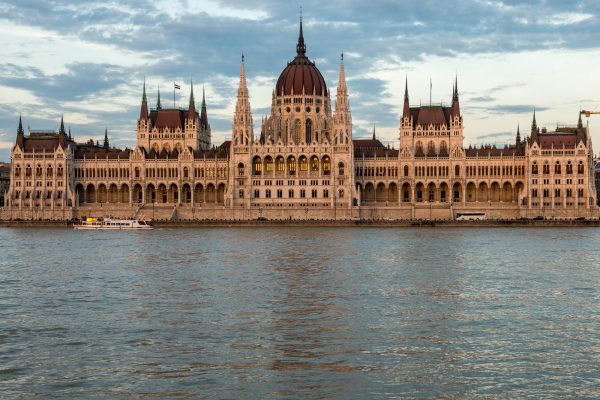
The most visible change may be along the Danube. Budapest is famous for the evening view of Parliament, Buda Castle, bridges and the riverside embankments. These views are still there, of course. But their brightness, colour and surrounding contrast may be different if some floodlighting is reduced.
That can be disappointing if you came with one very specific image in mind. It can also be a useful reminder that a city is not a stage set. Budapest is a working city, with residents, public services and changing conditions. Temporary restraint is easier to understand when it helps the wider system cope with an unusual situation.
News reports indicate that lighting restrictions are being introduced as temporary measures and may differ by institution or site. Check current local information before travelling across the city for a particular view. The situation should not be treated as permanent. This current report explains the wider energy-saving measures.
A photographer’s alternative plan
Budapest does not begin only when the lights come on.
The most reliable time for a wide city view is often the period before darkness: late afternoon, golden hour and blue hour. In summer, the sky can stay bright long after sunset. The river, trams and bridges are often easier to photograph then than in full darkness, because the sky still has colour and buildings retain detail.
If landmark illumination is limited, look closer. A wet pavement can reflect tram lights. A metro station can offer strong lines and movement. A café window, a market closing for the evening, a quiet side street, a silhouette on a bridge or a view across the Danube can tell a more personal story than a perfectly lit façade.
This is also a good time to avoid trying to photograph everything. Choose one neighbourhood, walk slowly and watch how people use the city after work. The photograph may be less familiar, but more connected to the visit you actually had.
Plan, but do not over-plan
Bring a charged camera or phone, a small cloth for lenses in humid weather, and an alternative route. If you are carrying a tripod, check whether your intended location is practical and safe before setting it up. On busy pavements and bridges, it is often better to work quickly and leave space for others.
A photo walk can be adapted to the actual weather, season and light. If you would like help finding worthwhile subjects rather than chasing one guaranteed illuminated view, PhotoSherpa can arrange a tailored Budapest walk.
Written by Zoltan Szabo photographer and licensed tour guide
PhotoSherpa, Budapest Photo Walks